Miyaku — Wellness app
LiveWellness app. Nutrition coach built on three pillars: Nutrition, Hydration, and Movement.
Product
I built Miyaku because I wanted a nutrition coach that wouldn't force me to weigh every plate or search endless databases — something that reads my day across the three pillars I care about: nutrition, hydration, and movement.
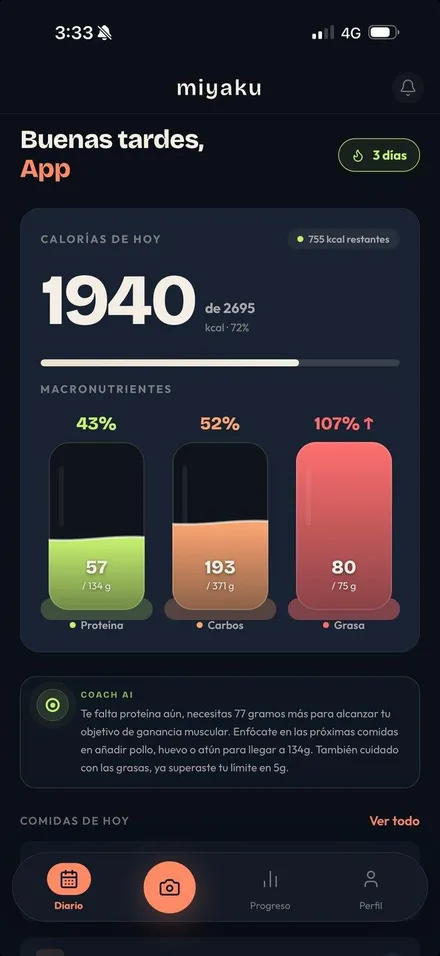
- NutritionYou take a photo of the plate and a vision model identifies the food and calculates calories and macros instantly, with suggestions like "High in protein" or "Low in carbs." You can edit the result — name, meal type, macros — or search a catalog of about 100 common foods as an alternative to the photo. You review the history by week, with a calorie chart and the detail for each day.
- HydrationYou log water in "glasses" of a size you choose (150 to 500 ml) — tap an empty glass and it fills, tap a full one and it empties, no plus or minus buttons. The daily goal is calculated automatically from your weight and activity level, and it's treated as a separate goal: it doesn't mix with your calorie balance.
- MovementYou connect Apple Health once, and from there Miyaku reads steps, distance, active calories, and exercise minutes from any wearable you already have synced — Apple Watch, Garmin, Fitbit, or the iPhone itself — without integrating each device separately. You see it summarized on Home and in 7-day charts in Progress.
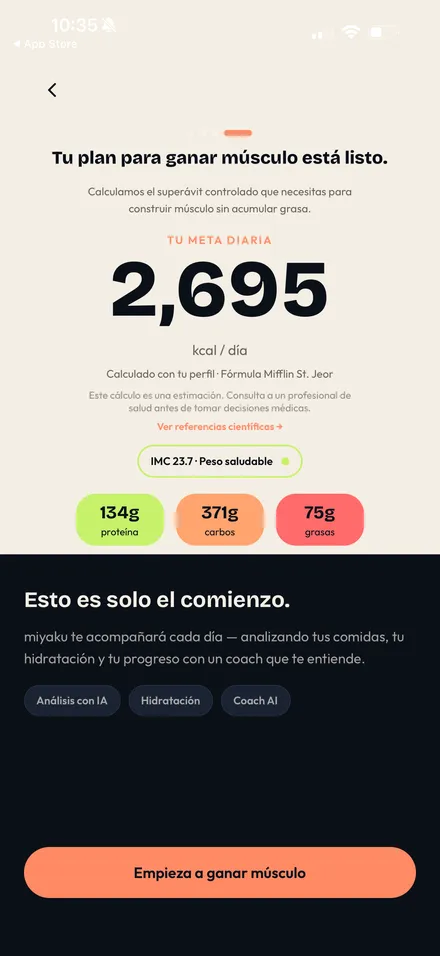
- OnboardingBefore letting you into the app, it asks for your goal, your physical stats, and your activity level, and calculates your real macros with the Mifflin-St Jeor formula — no generic values from day one.
- AI coachEvery day you get a message from the coach based on your macros — it recognizes about 12 different situations, from being short on protein to a day-end wrap-up based on how you did. Your Momentum Score is calculated over a 14-day window (50% food, 30% protein, 20% hydration): you always see the score, the written analysis is PRO only.
- FreemiumMiyaku offers an annual PRO plan, and the price you see is always pulled live from RevenueCat — never hardcoded or stored only in the database, because Apple charges differently by country.
Technical
- I built the frontend in React Native CLI (not Expo managed), with EAS for native builds.
- I organized the architecture in layers, both in the frontend and the backend.
- I designed DynamoDB with a single table + GSIs — I resolved everything through Query, never Scan.
- I use the Anthropic API (Claude Haiku with vision) for photo analysis and the coach's insights.